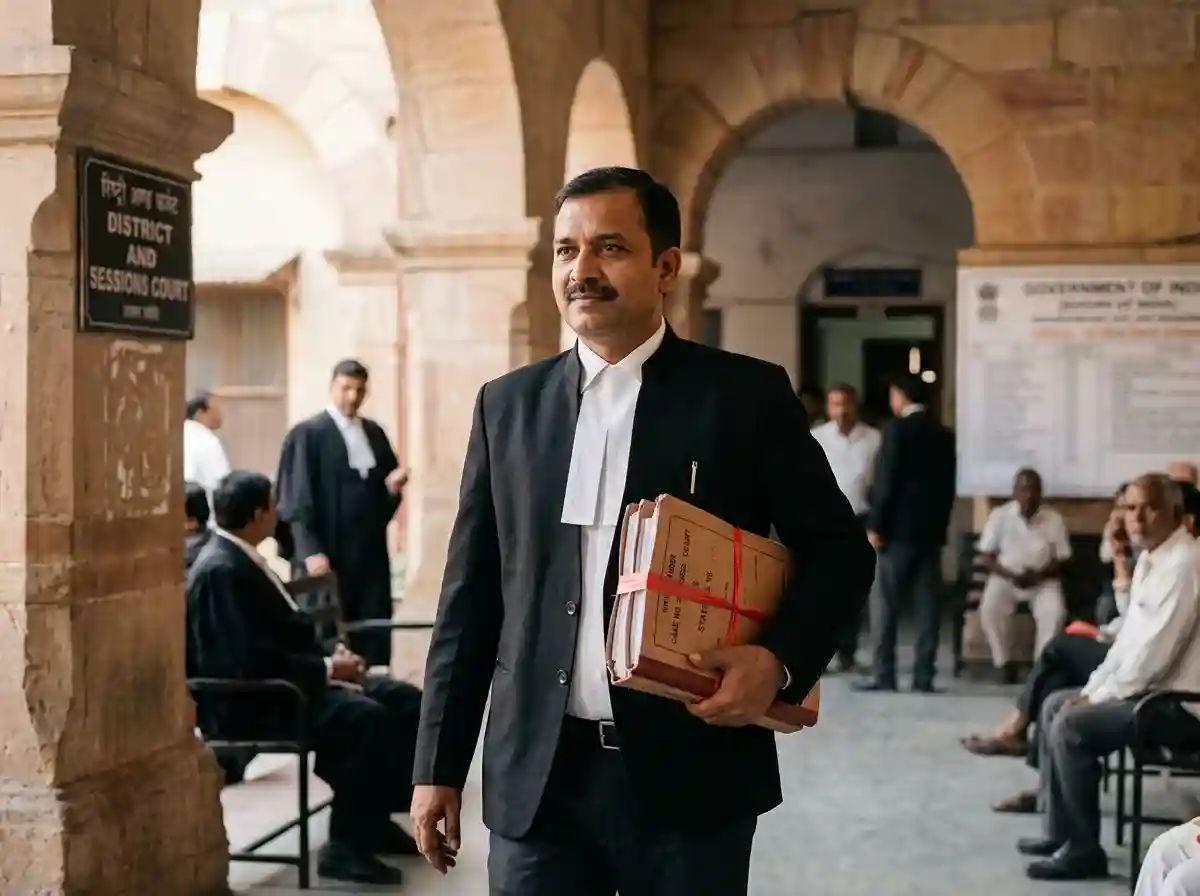
Career Guide | Public Prosecutor 2026Government Job | Criminal Justice SystemUpdated: May 2026 | BNS/BNSS/BSA
How to Become a Public Prosecutor in India 2026 | Eligibility, Types, Salary, Exam & Career Path
A career as a Public Prosecutor is one of the most prestigious and impactful roles in India's criminal justice system. As the legal representative of the state in criminal trials, a public prosecutor embodies the principle that justice must be done | and seen to be done. From Assistant Public Prosecutor handling Magistrate Court trials to Special Public Prosecutor prosecuting high-profile terrorism cases, this complete guide covers every step, every exam, every salary figure, and every career milestone you need to build this career in 2026.
LLB
Minimum Qualification
7 Yrs
Practice for PP (Criminal)
₹65K+
APP Monthly In-Hand
₹1.5L+
SPP Monthly Pay
44
UPSC CBI Vacancies 2025
📅 Updated: May 29, 2026 | Public Prosecutor Career Guide | India 2026
✍️ By Priya Kumari, LLM NALSAR | Senior Law Careers Editor
🔍 Data: UPSC Official | CrPC/BNSS | 7th Pay Commission | State PSC Notifications
Public Prosecutor Career Guide 2026 | Eligibility, Exam, Types & Salary | Source: LawGuru India | Data: UPSC, BNSS 2023, 7th Pay Commission
⚡ Quick Answer: Public Prosecutor Career in India 2026
A Public Prosecutor is a government-appointed lawyer who represents the state in criminal trials. To become one: complete LLB → gain criminal advocacy experience (3 years for APP, 7 years for PP) → clear the state APP exam or UPSC CBI APP & PP recruitment test → personal interview → appointment. Salary: APP (UPSC/Central) earns ₹44,900–₹1,42,400/month (Level-7, 7th CPC); PP earns ₹56,100–₹1,77,500/month (Level-10); SPP earns ₹73,200–₹1,50,000+/month. The UPSC CBI APP & PP Exam 2026 was conducted on January 11, 2026 (44 vacancies; 120 MCQs, 2 hours). All exams now test BNS 2023, BNSS 2023, and BSA 2023 | the three new criminal laws in force from July 1, 2024.
⚖️ Criminal Law Specialist🏛 Government Gazetted Post✅ Pension + Job Security📋 BNS/BNSS/BSA 2023 in Syllabus
A Public Prosecutor (PP) is a government-appointed lawyer whose constitutional and statutory mandate is to represent the State in criminal proceedings before courts. Under Section 18 of the Bharatiya Nagarik Suraksha Sanhita (BNSS) 2023 (which replaced Section 24 of the CrPC), the Central and State Governments appoint Public Prosecutors for every High Court and for every district. The Public Prosecutor is not merely the government's lawyer | they are an officer of the court whose foremost duty is to ensure that justice is done.
This fundamental distinction matters: while a defence lawyer's job is to secure their client's acquittal, a public prosecutor's job is not to secure a conviction at any cost | it is to place all the evidence before the court truthfully and assist the court in arriving at the correct verdict. The Supreme Court of India has consistently held that a public prosecutor has a duty to the court and to the public | not merely to the government that appoints them. This makes the role uniquely principled among all legal careers in India.
In practice, public prosecutors handle: filing charge sheets, bail hearings, trial proceedings, cross-examination of witnesses, depositions, sentencing arguments, and criminal appeals. Their work is the backbone of India's criminal justice system | without effective prosecution, even the strongest investigations fail in court.
⚖️ PP Career | Quick Facts 2026
Governing Law
Section 18, BNSS 2023
Minimum Qualification
LLB (3-yr or 5-yr)
Experience (PP)
7 years criminal practice
Experience (APP)
3 years (varies by state)
APP In-Hand Salary
₹65,000–₹80,000/mo
PP In-Hand Salary
₹80,000–₹1,10,000/mo
UPSC Exam (2026)
Jan 11, 2026 | 44 Vacancies
📋 What PPs Do | Daily Reality
Review case diaries from investigating officers
File and argue charge sheets in Sessions Court
Oppose bail in serious criminal matters
Examine prosecution witnesses in-chief
Cross-examine defence witnesses
Argue on sentencing after conviction
File revisions and appeals before High Court
Advise police on legal aspects of investigation
2. Types of Public Prosecutors in India | The Complete Hierarchy
India's prosecution system operates through a structured hierarchy with distinct roles at each level. Understanding these distinctions is critical before deciding which prosecution role to target in your career.
The Assistant Public Prosecutor is the entry-level prosecution officer who handles cases in Magistrate Courts | including the Court of Judicial Magistrate First Class (JMFC), Chief Judicial Magistrate (CJM), and Metropolitan Magistrate Courts. APPs deal with the bulk of criminal cases in India: theft, cheating, assault, NDPS Act cases, minor offences, and compoundable offences. At the Central level (UPSC CBI), the APP handles CBI cases filed before Magistrate-level courts. At the state level, APPs are recruited by State Public Service Commissions. The role requires a minimum of 3 years of advocacy experience (for states) | for UPSC CBI APP, a law degree alone suffices. The CBI APP was last notified with 19 vacancies in 2025 (exam: January 11, 2026), at Level-7 pay matrix (₹44,900–₹1,42,400/month).
Public Prosecutor (PP) Sessions Court Level
Sessions Court + High CourtCentral: Level-10 | ₹56,100–₹1,77,500/mo7 Years Criminal Practice Required
The Public Prosecutor operates at the Sessions Court level and represents the state in serious criminal trials | murder, dacoity, kidnapping, rape, corruption, financial crimes, and offences under special laws (NDPS, PMLA, POCSO, UAPA). Under Section 18(1) of BNSS 2023, the Central Government appoints PPs for High Courts and for CBI matters. State governments appoint PPs for each district. A minimum of 7 years of practice as an advocate in criminal courts is mandatory for PP appointment at the state level and for UPSC CBI PP. The UPSC CBI PP was last notified with 25 vacancies in 2025 (exam: January 11, 2026), at Level-10 pay matrix (₹56,100–₹1,77,500/month). Annual package with allowances starts at approximately ₹6,73,200.
Additional Public Prosecutor (Addl. PP) Intermediate Senior Level
Promotion from PPComplex Criminal CasesHigh-Value Financial Crimes
Additional Public Prosecutors are promoted from PP positions and handle complex, multi-accused, or high-profile criminal cases at the Sessions Court and High Court levels. They typically handle cases under PMLA 2002 (money laundering), NDPS Act 1985 (drug trafficking), POCSO Act (child sexual abuse), and Economic Offences. In some states, Additional PPs are directly recruited by government notification for specialised prosecution roles. They work closely with investigating agencies like the ED, CBI, and NCB on agency-specific prosecution matters. Salary: approximately equivalent to state Level-11 or Level-12 pay matrix.
Special Public Prosecutor (SPP) High-Profile Cases
Direct Government Appointment10+ Years Experience Required₹73,200–₹1,50,000+/month
Special Public Prosecutors are appointed directly by the Central or State Government | without competitive examination | for specific high-profile, complex, or nationally sensitive cases. They handle terrorism trials (UAPA, NSA), organised crime, high-profile corruption (2G scam, coal scam), and cases before Special Courts (NDPS Courts, NIA Courts, PMLA Courts). The requirement is a minimum of 10 years of practice, and appointments are typically made from senior advocates with outstanding criminal law credentials. SPPs are not permanent service appointments in the way APP/PP are | they are often case-specific or tenure-based. Notable SPPs have included lawyers who handled the 26/11 Mumbai attacks case and the Nirbhaya case prosecution.
Advocate General / Additional Solicitor General Constitutional Post
Article 165 (State) | Article 76 (Centre)Government Counsel at HC/SC Level20+ Years Practice | Apex Career Level
The Advocate General of a State (Article 165, Constitution) and the Solicitor General / Additional Solicitor General of India (Article 76) are the highest levels of government legal representation. While technically not "prosecutors" in the trial sense, they represent the government in civil and criminal matters before High Courts and the Supreme Court respectively. These positions are the apex of a government law career and are filled by appointment from senior advocates with exceptional track records. The Solicitor General of India earns ₹7,50,000+ per month.
3. Roles & Responsibilities of a Public Prosecutor
The role of a public prosecutor extends well beyond the courtroom. Understanding the full scope of duties is essential before choosing this career | and is directly tested in the APP exam's personal interview round.
📂
Pre-Trial: Case Preparation & Charge Sheet Review
Before the trial begins | Police liaison | Evidence review
The PP's first responsibility in any case is reviewing the police charge sheet (now called the "Chargesheet" under BNSS 2023) to assess whether it discloses a prima facie case. They examine the evidence collected, identify gaps in the investigation, and advise the Investigating Officer (IO) on any additional evidence needed. If the charge sheet is deficient, the PP can request a supplementary charge sheet. A seasoned PP is a constructive advisor to the police | not a rubber stamp. Poor pre-trial preparation is the leading cause of acquittals in Indian courts, making this stage critical.
⚖️
Trial: Examination of Witnesses & Evidence Presentation
The core of prosecution work | Examination-in-chief + Cross-examination
During trial, the PP examines prosecution witnesses in-chief (eliciting their account of events), cross-examines defence witnesses (challenging the defence's version), and objects to inadmissible evidence under BSA 2023 (Bharatiya Sakshya Adhiniyam). Effective trial advocacy is the hallmark of a good PP | it requires not just legal knowledge but presence of mind, the ability to adapt cross-examination in real time, and a thorough understanding of what evidence is and is not admissible. The PP must maintain the court's trust by being truthful about the strength and weaknesses of the prosecution's case.
Magistrate + Sessions Court bail hearings | Anticipatory bail opposition
One of the highest-volume tasks for an APP/PP is appearing in bail hearings. Under BNSS 2023, accused persons can apply for bail at multiple stages | at the time of arrest, pending trial, and pending appeal. The PP must assess whether the accused poses a flight risk, tampering risk, or danger to the public, and articulate these objections clearly before the court. In cases involving serious offences (murder, rape, NDPS, UAPA), the PP must argue for remand and oppose bail vigorously. The quality of bail arguments directly affects case outcomes | many accused who commit further offences do so while on bail.
📜
Post-Trial: Sentencing Arguments & Appeals
After conviction | Sentencing hearing | Filing appeals against acquittals
After a conviction, the PP argues on the appropriate sentence | presenting the gravity of the offence, aggravating circumstances, and the accused's prior criminal history. If the court awards an inadequate sentence, or if the accused is acquitted, the PP can file a revision or appeal to the High Court under BNSS 2023. This post-trial work is significant | the PP has a duty to challenge acquittals that are perverse or based on legal errors. Appeals require strong written advocacy skills and deep knowledge of criminal appellate law.
4. Eligibility to Become a Public Prosecutor in India 2026
Eligibility Criterion
APP (State / UPSC CBI)
PP (State / UPSC CBI)
SPP (Direct Appointment)
Minimum Qualification
LLB from recognised university
LLB from recognised university
LLB (minimum); senior advocates preferred
LLB Minimum Percentage
UPSC CBI: Not specified; States: 50–55%
50–55% (varies by state)
No specific % | experience controls
Advocacy Experience
UPSC CBI: None required; State: 3 years (criminal courts)
7 years of criminal practice at the Bar
10+ years of distinguished criminal practice
Type of Practice Required
Criminal courts (for state APP)
Criminal cases only (civil practice does not count)
Criminal law (high-stakes cases preferred)
Age Limit (General)
Max 35 years (UPSC); varies by state
Max 35 years (UPSC); varies by state
No age limit | experience-based
Age Relaxation (SC/ST/OBC)
3–5 years as per government rules
3–5 years as per government rules
Not applicable
Selection Process
Written exam (MCQ) + Interview
Written exam (MCQ) + Interview
Direct government appointment; no exam
Appointing Authority
Central Govt (UPSC CBI) / State PSC
Central Govt (UPSC) / Governor (State)
Central or State Government (direct)
📌 Critical Change: New Criminal Laws from July 1, 2024
The Bharatiya Nyaya Sanhita (BNS) 2023 replaced the IPC, Bharatiya Nagarik Suraksha Sanhita (BNSS) 2023 replaced the CrPC, and Bharatiya Sakshya Adhiniyam (BSA) 2023 replaced the Indian Evidence Act | all from July 1, 2024. All APP and PP exams from 2025 onwards test these three new laws. Section 18 BNSS (earlier Section 24 CrPC) now governs PP appointments. Candidates must study the new laws, which contain significant structural changes including sections on organised crime, terrorism, and new trial procedures.
5. How to Become a Public Prosecutor in India | Step-by-Step Guide
The path to becoming a public prosecutor is well-defined | but demands patience, consistent criminal court experience, and rigorous exam preparation. Here is the complete step-by-step roadmap:
1
Complete LLB | Focus on Criminal Law
Obtain an LLB degree (5-year BA LLB after Class 12 or 3-year LLB after graduation) from a BCI-recognised law college. During your degree, prioritise courses in Criminal Law (BNS/IPC), Criminal Procedure (BNSS/CrPC), Evidence Law (BSA), and Constitutional Law. Participate in moot courts with criminal law problems | they directly simulate prosecution advocacy. Aim for 55%+ in your LLB; many state PSCs set minimum percentage bars for APP recruitment.
2
Clear AIBE & Enrol with State Bar Council
Pass the All India Bar Examination (AIBE) conducted by the Bar Council of India | mandatory for practising as an advocate. Then enrol with your State Bar Council. The enrolment certificate is a mandatory document for all APP/PP exam applications. At this stage, also register on the UPSC and your state PSC websites and set up email notifications for APP/PP recruitment notifications.
3
Build Criminal Court Advocacy Experience | This Is Your Most Important Asset
For APP (state-level): practise in criminal courts for at least 3 years | appear in bail hearings, trial proceedings, and revision petitions. For PP: 7 years of criminal practice is mandatory. This experience must be in criminal courts specifically | civil practice does not count towards the prosecution service requirement. Work under a senior criminal lawyer initially to understand the courtroom dynamics of criminal trials, the workings of the police-prosecution relationship, and how to handle hostile witnesses. Build a portfolio of varied criminal cases.
4
Monitor & Apply for APP/PP Exam Notifications
Watch for notifications on: upsc.gov.in (for UPSC CBI APP & PP | typically once a year), your State PSC website (UPPSC, MPSC, RPSC, KPSC, TNPSC etc.), and your state Directorate of Prosecution official website. Follow PW Judiciary, Testbook Law, and LawGuru India for real-time exam notification updates. Complete the application form carefully | any error in the advocacy experience declaration is grounds for disqualification. Submit all documents: LLB marksheet, Bar Council certificate, experience certificate, and category certificate.
5
Clear the Written Examination
The written exam format differs by level: UPSC CBI APP & PP | 120 MCQs, 2 hours, 300 marks, ⅓ negative marking; State APP exams | format varies (MCQ or MCQ + descriptive). Core subjects: BNS 2023, BNSS 2023, BSA 2023, Constitution of India, CPC, Prevention of Corruption Act, PMLA, NDPS Act, POCSO, and relevant special laws. Focus heavily on BNS/BNSS/BSA | these are new laws and every examiner tests them extensively in 2025–2026 exams.
6
Clear Personal Interview
The personal interview for APP/PP assesses: criminal law knowledge depth, courtroom experience and real-case examples, communication and advocacy skills, analytical ability on fact-based criminal scenarios, and judicial temperament. Unlike judicial service interviews that test personality broadly, PP interviews are heavily law-focused. Be prepared to discuss cases you have personally handled, your understanding of new BNS/BNSS changes, and your approach to common prosecution challenges (hostile witnesses, weak forensic evidence, tampered evidence).
7
Medical Examination & Appointment
Selected candidates undergo a government medical examination followed by police character verification. On clearance, appointment letters are issued. Central government appointees join at Level-7 (APP) or Level-10 (PP) of the 7th Pay Commission matrix. State appointees join at their respective state pay levels. Initial postings are typically at Sessions Court or Magistrate Court level in the district where the vacancy exists. Transfers within the cadre occur based on seniority and departmental requirements.
The UPSC CBI Assistant Public Prosecutor (APP) and Public Prosecutor (PP) Recruitment 2025 is the most prestigious central government prosecution exam in India. The exam was conducted on January 11, 2026, for 44 vacancies (19 APP + 25 PP) under the CBI, Ministry of Home Affairs. Here is everything you need to know about the UPSC CBI APP & PP exam:
📋
UPSC CBI APP & PP Notification
August 23, 2025
✓ Released
📝
Application Last Date
September 11, 2025
✓ Closed
📅
UPSC CBI APP & PP Exam Date
January 11, 2026 (Sunday)
✓ Conducted
⏰
Exam Timing
10:00 AM – 12:00 PM (2 hours)
✓ One shift
🏆
Result / Interview
Expected mid-2026
⏳ Upcoming
💼
Total Vacancies 2025-Cycle
44 (19 APP + 25 PP)
✓ Permanent posts
Exam Feature
CBI APP
CBI PP
Pay Level (7th CPC)
Level-7 (₹44,900–₹1,42,400)
Level-10 (₹56,100–₹1,77,500)
Experience Required
Law degree only (no exp. required)
7 years criminal practice at Bar
Vacancies (2025-cycle)
19
25
Exam Mode
Offline (pen-and-paper)
Questions
120 MCQs
Duration
2 hours (10 AM – 12 PM)
Total Marks
300 marks (each Q = 2.5 marks)
Negative Marking
⅓ mark deducted per wrong answer
Unattempted Questions
No penalty | leave uncertain answers blank
Selection After Written
Personal Interview (UPSC panel)
Job Nature
Permanent, Gazetted, Group B (APP) / Group A (PP)
Posting Location
CBI offices across India | transferable
7. State APP Exams 2026 | Key States & Recruitment Overview
Every state in India has its own prosecution service, and APP vacancies are regularly notified by State Public Service Commissions. Recruitment patterns, eligibility, and pay scales vary significantly by state. Here is an overview of major state APP exams:
The APP and PP exam syllabus is centred entirely on criminal law | with the landmark shift to the three new criminal laws (BNS, BNSS, BSA) from July 2024 meaning that all 2025–2026 exams now test the new statutory framework. Here is the comprehensive subject-wise breakdown:
BNS 2023 (Bharatiya Nyaya Sanhita): Replaced IPC from July 1, 2024. All offences and penalties: offences against the body (murder, culpable homicide, hurt, assault), offences against property (theft, robbery, dacoity, extortion), offences against women (rape, stalking, trafficking), forgery, cheating, defamation, abetment, criminal conspiracy, organised crime (new section), terrorism (new section), and punishment provisions. Note: BNS retains most IPC structure but with renumbered sections and significant additions.
BNSS 2023 (Bharatiya Nagarik Suraksha Sanhita): Replaced CrPC from July 1, 2024. Jurisdiction and powers of criminal courts, FIR registration, arrest and bail (including new provisions on bail in organised crime), trial procedure (Sessions trial, Magistrate trial, summons case), charge framing, evidence recording, sentencing, appeals, revisions, and new provisions on trial via video conferencing and electronic evidence. PP appointments governed by Section 18 BNSS (earlier Section 24 CrPC).
BSA 2023 (Bharatiya Sakshya Adhiniyam): Replaced Indian Evidence Act from July 1, 2024. Types of evidence (oral, documentary, electronic), relevancy of facts, admissions, confessions (Section 23 BSA | replaces Section 27 Evidence Act), dying declarations, res gestae, expert evidence, burden of proof, presumptions, estoppel, and examination of witnesses. Key change: electronic records now treated as primary evidence by default (Section 63 BSA).
Constitution of India: Articles 20–22 (rights of accused), Article 32 (SC jurisdiction), Article 136 (special leave), Article 226 (HC jurisdiction), Article 227 (HC superintendence), fundamental rights as applicable to criminal proceedings, emergency provisions, and constitutional provisions on the judiciary.
Special Laws (Critical for UPSC CBI): Prevention of Corruption Act 1988 (as amended 2018), PMLA 2002, NDPS Act 1985, UAPA 2008 (as amended 2019), NIA Act 2008, POCSO Act 2012, Protection of Women from Domestic Violence Act 2005, Juvenile Justice (Care and Protection) Act 2015, SC/ST (Prevention of Atrocities) Act 1989, and relevant sections of IBC (Insolvency and Bankruptcy Code) for financial crime cases.
CPC 1908: Basic civil procedure framework relevant to criminal matters | especially execution of decrees, interlocutory orders, and injunctions relevant to property disputes arising from criminal cases. UPSC CBI tests CPC at foundational level.
Current Affairs in Criminal Law: Landmark Supreme Court judgments on bail, trial procedure, confessions, police powers, and rights of accused. Updated 2024–2025 judgments post-BNS/BNSS implementation are heavily tested. Follow Live Law and Bar & Bench for weekly legal updates.
9. Public Prosecutor Salary in India 2026 | Level-Wise & State-Wise
The salary of a public prosecutor in India is structured under the 7th Pay Commission pay matrix (for central government posts) or state-specific pay scales. The salaries are competitive with other government law careers and come with significant perquisites | DA, HRA, transport allowance, medical coverage, pension, and leave travel concession (LTC).
9.1 Central Government PP Salary | 7th Pay Commission
Position
Pay Level
Basic Pay Range
Approx. In-Hand
CBI APP (Central)
Level-7
₹44,900–₹1,42,400
₹65,000–₹80,000/mo
CBI PP (Central)
Level-10
₹56,100–₹1,77,500
₹80,000–₹1,10,000/mo
Delhi APP
Level-8
₹47,600–₹1,51,100
₹68,000–₹85,000/mo
Special PP (Central)
Level-12+
₹78,800–₹2,09,200
₹1,10,000–₹1,50,000/mo
UPSC PP (Annual Package)
Level-10
Starts ₹6,73,200/year (incl. allowances)
9.2 PP Salary Comparison | Level vs In-Hand
Allowance Type
APP (Level-7)
PP (Level-10)
Notes
Basic Pay
₹44,900
₹56,100
Increases with increments
Dearness Allowance (DA)
~₹19,117 (42.6%)
~₹23,899
Revised every 6 months
HRA (Metro City)
~₹10,776 (24%)
~₹13,464
Varies: 8%/16%/24% by city
Transport Allowance
₹3,600–₹7,200
₹3,600–₹7,200
Depends on city
Gross Monthly (Approx.)
₹65,000–₹80,000
₹80,000–₹1,10,000
Before deductions
Annual Package (approx.)
₹7.8L–₹9.6L
₹9.6L–₹13.2L
Including all allowances
Pension
Yes | NPS (National Pension System) for post-2004 entrants
10. Public Prosecutor Career Growth & Promotion Path
The prosecution service offers a clearly defined career ladder with regular promotions based on seniority, performance reports, and departmental examinations. Here is the progression from entry-level APP to the apex of the government prosecution career:
Stage 1
0–5 Years
Assistant Public Prosecutor → Public Prosecutor
APP handles Magistrate Court cases. After 5–7 years of service + satisfactory performance reports, eligible for promotion to PP. At UPSC level, direct appointment as PP requires 7 years of advocacy experience before joining. Most state APPs get promoted to PP within 5–8 years based on merit and departmental seniority.
Stage 2
5–12 Years
Public Prosecutor → Additional Public Prosecutor
Handles serious Sessions Court trials, High Court appearances, and complex criminal matters. Eligible for promotion to Additional PP after 5–7 years as PP. At this level, PPs often develop specialisation in high-value crime areas (financial fraud, NDPS, organised crime) that shape their long-term career trajectory.
Stage 3
12–20 Years
Additional PP → Senior PP / Director of Prosecution
Handles cases before High Courts, manages district prosecution offices, and advises on prosecution policy. In central service, may be posted to the CBI Joint Director (Legal) level. Some candidates at this stage may be elevated to SPP for specific high-profile cases by direct government appointment. Director of Prosecution is the highest administrative position in state prosecution service.
Stage 4
20+ Years
Special PP / Advocate General / Law Officer / Academia
Peak career: SPP appointment for national importance cases, Advocate General of a State (Article 165), Additional Solicitor General of India (Article 76), or Professor of Criminal Law at a law school. Some senior PPs leverage their criminal law expertise to transition into private practice as defence lawyers or as legal consultants to government agencies.
11. Public Prosecutor vs Judge | Career Comparison
Both public prosecutor and judicial service are prestigious government law careers | but they differ fundamentally in nature, selection process, salary, and day-to-day work. Here is a direct comparison to help you choose:
⚖️ Public Prosecutor
Core Role: Represent the state; prove guilt of accused
If you love advocacy, argumentation, and the thrill of criminal trials | and want to actively "fight" cases in court | the prosecution service is ideal. If you prefer impartial decision-making, legal analysis, and writing judgments | and value authority over one specific domain | the judicial service is better suited. Note that the judicial service entry salary (₹77,840) is higher than the APP entry pay (₹44,900), but a PP's career is faster-moving in terms of courtroom visibility. Many candidates appear for both exams simultaneously | the overlapping criminal law syllabus (BNS, BNSS, BSA, Constitution) means that preparing for one significantly prepares you for the other.
12. How to Prepare for the APP Exam 2026 | Subject-Wise Strategy
BNS 2023 is the most heavily tested subject in every APP/PP exam from 2025 onwards. Study: all 358 sections systematically, with particular focus on | offences against the body (Sections 99–146), property offences (Sections 303–334), offences against women (Sections 63–99), organised crime (Section 111), terrorism (Section 113), and sedition/offences against the State (Sections 147–158). Use Ratanlal & Dhirajlal's updated BNS edition and PS Pillai's Criminal Law. Cross-reference every BNS section with its IPC equivalent | examiners frequently test what changed and what remained the same.
📋 BNSS 2023 (Bharatiya Nagarik Suraksha Sanhita) | Critical for PP Role
BNSS governs the entire criminal trial procedure | bail provisions, FIR, charge, trial, judgment, appeal, and revision. For the PP exam, master: Section 18 (PP appointment), bail provisions (Sections 478–510) with new restrictions on bail in organised crime, Section 173 (charge sheet filing), trial procedure (Sessions trial Sections 252–265, Magistrate trial Sections 262–283), and the new provisions on electronic FIR, video conferencing trials, and forensic investigation. Use R.V. Kelkar updated with BNSS changes and Sarkar's Code of Criminal Procedure.
📜 BSA 2023 (Bharatiya Sakshya Adhiniyam) | Master Evidence Law
BSA 2023 is the new Evidence Act | and understanding it deeply is what separates a good prosecutor from a mediocre one. Key sections: Section 23 BSA (confession to police officer | replaces Section 27 Evidence Act, with changes), Section 25 BSA (dying declaration), electronic records as primary evidence (Section 63), expert witnesses (Sections 39–46), examination of witnesses (Sections 121–164), and privileged communications. Use Batuk Lal and Avtar Singh's updated Evidence Act books. Focus on landmark Supreme Court cases on admissibility of electronic evidence and confessional statements.
⚡ Special Laws | Critical for UPSC CBI APP & PP
The UPSC CBI exam heavily tests special laws relevant to CBI's work: Prevention of Corruption Act 1988 (as amended 2018) | trap cases, disproportionate assets, and new offences of bribery; PMLA 2002 | money laundering definition, attachment of proceeds, and trial procedure; NDPS Act 1985 | Section 37 (bail restrictions), Section 50 (search requirements), and sentencing. For all state APP exams: also study POCSO Act 2012 (Section 29 presumption of guilt), the SC/ST (Prevention of Atrocities) Act, and Domestic Violence Act 2005.
📚 Best Books for APP / PP Exam 2026
BNS 2023: Ratanlal & Dhirajlal | The Bharatiya Nyaya Sanhita (Latest Ed.) | PSA Pillai's Criminal Law (updated for BNS) | KD Gaur | Criminal Law: Cases and Materials
BNSS 2023: R.V. Kelkar | Criminal Procedure (updated BNSS edition) | Sarkar's Code of Criminal Procedure (BNSS updated) | SC Sarkar | CrPC/BNSS Bare Act with commentary
BSA 2023: Batuk Lal | The Law of Evidence (BSA updated) | Avtar Singh | Principles of the Law of Evidence (BSA edition) | Vepa P. Sarathy | Law of Evidence
Constitution: V.N. Shukla's Constitution of India | M.P. Jain | Indian Constitutional Law (criminal justice provisions focus)
Special Laws: Suresh T. Viswanathan | Prevention of Corruption Act | PMLA bare text + ED Guidance | Narcotics Control Bureau practice materials
Current Affairs + Judgments: Live Law weekly digest | Bar & Bench Supreme Court roundup | SCC Online weekly case summary | The Hindu Legal Correspondent reports
13. How to Become a Public Prosecutor | FAQs
How to become a Public Prosecutor in India?
+
To become a Public Prosecutor in India: (1) Complete an LLB degree from a BCI-recognised institution; (2) pass AIBE and enrol with the State Bar Council as an Advocate; (3) practise in criminal courts | minimum 3 years for APP (state exams), minimum 7 years for PP (state/UPSC); (4) apply for and clear the APP/PP written exam (MCQs at central level, MCQ/descriptive at state level); (5) clear the personal interview; (6) clear the medical examination and receive appointment. UPSC CBI APP does not require advocacy experience | a law degree alone qualifies. Special Public Prosecutors are directly appointed by the government without any competitive exam.
What is the salary of a Public Prosecutor in India in 2026?
+
Public Prosecutor salary in India 2026: Central Government APP (UPSC CBI) | Level-7 pay matrix, basic ₹44,900–₹1,42,400/month; in-hand approximately ₹65,000–₹80,000/month after DA+HRA+TA. Central Government PP (UPSC) | Level-10, basic ₹56,100–₹1,77,500/month; in-hand approximately ₹80,000–₹1,10,000/month. Delhi APP (State) | Level-8, ₹47,600–₹1,51,100/month. Special PP | ₹73,200–₹1,50,000+/month. Annual package for UPSC PP starts from ₹6,73,200 including all allowances. All positions include pension (NPS), medical, HRA, and LTC.
What is the difference between APP, PP, and SPP?
+
APP (Assistant Public Prosecutor): entry-level; Magistrate Court cases; 3 years experience (state) or law degree alone (UPSC CBI); Level-7 pay. PP (Public Prosecutor): senior to APP; Sessions Court and High Court; 7 years criminal practice mandatory; Level-10 pay. Additional PP: intermediate senior level; complex criminal cases, promoted from PP. SPP (Special Public Prosecutor): highest prosecution tier; directly appointed by government for high-profile national cases (terrorism, organised crime); 10+ years experience; ₹73,200–₹1,50,000+/month. SPPs are not recruited through competitive exams | they are hand-picked by the government from senior advocates.
What is the UPSC CBI APP & PP exam pattern?
+
UPSC CBI APP & PP Exam Pattern 2026: 120 MCQs | 2 hours (10 AM–12 PM) | 300 total marks (each question = 2.5 marks) | ⅓ negative marking for wrong answers | no penalty for unattempted questions. Mode: offline (pen-and-paper). Subjects: BNS 2023, BNSS 2023, BSA 2023, Constitution of India, CPC, Prevention of Corruption Act, PMLA 2002, NDPS Act 1985, NIA Act 2008, POCSO 2012, and other criminal law statutes. The exam is followed by a personal interview (UPSC board). 44 total vacancies (19 APP + 25 PP) were announced in 2025-cycle. Exam conducted on January 11, 2026.
Which subjects should I prepare for the APP exam?
+
Core subjects for the APP exam 2026: BNS 2023 (replaced IPC | all offences and punishments), BNSS 2023 (replaced CrPC | entire trial procedure, bail, charge, appeals), BSA 2023 (replaced Evidence Act | admissibility, confessions, electronic evidence), Constitution of India (criminal justice provisions, Articles 20–22, 32, 136, 226), Prevention of Corruption Act, PMLA 2002, NDPS Act 1985, POCSO 2012, NIA Act 2008, and SC/ST Atrocities Act. Also test: landmark Supreme Court judgments on criminal procedure and evidence (especially post-July 2024 judgments on new criminal laws). CPC is tested at a basic level. Note: All exams from 2025 onwards test BNS/BNSS/BSA | not the old IPC/CrPC/Evidence Act.
Can I become a PP directly after LLB without advocacy experience?
+
No | you cannot become a PP directly after LLB without advocacy experience. PP requires 7 years of criminal advocacy practice under Section 18 BNSS 2023. However, the UPSC CBI APP post (not PP) does not specify advocacy experience | a law degree alone qualifies for the UPSC CBI APP post. So the entry point for a fresh LLB graduate into central government prosecution is UPSC CBI APP. After joining as CBI APP, you build experience and can be promoted to PP. For state APP exams, most states require 3 years of criminal court practice even for the APP post.
Is the APP exam harder than the judicial service exam?
+
APP and judicial service exams have overlapping syllabi (BNS, BNSS, BSA, Constitution, CPC) but different depth requirements. The judicial service exam (PCS-J) tests both civil and criminal law exhaustively | including Transfer of Property Act, Contract Act, Specific Relief Act, and Family Law | making the overall syllabus larger. The APP exam focuses specifically on criminal law and special statutes, requiring deeper specialisation but narrower breadth. Competition for judicial service is significantly higher (thousands of candidates compete for 20–50 seats per state per cycle); APP exams have smaller candidate pools. For candidates with strong criminal law backgrounds, APP can be more achievable; judicial service rewards broader legal preparation.
Senior Law Careers Editor, LawGuru India | LLM NALSAR Hyderabad
LLM from NALSAR University of Law, Hyderabad. 8+ years covering judicial service exams, public prosecution careers, and criminal law for law students across India. UPSC CBI APP & PP data sourced from official UPSC notification (Advt. 12/2025). Salary data sourced from 7th Pay Commission pay matrix and UPSC official notifications. BNS/BNSS/BSA analysis based on official Gazette of India. Updated May 29, 2026.
Build Your Public Prosecutor Career | Start with the Right Law Degree
Every public prosecutor career begins with a strong LLB from a good law college. Prepare for CLAT 2027 to access India's top NLUs | and build the criminal law foundation that will take you to the prosecution bench.