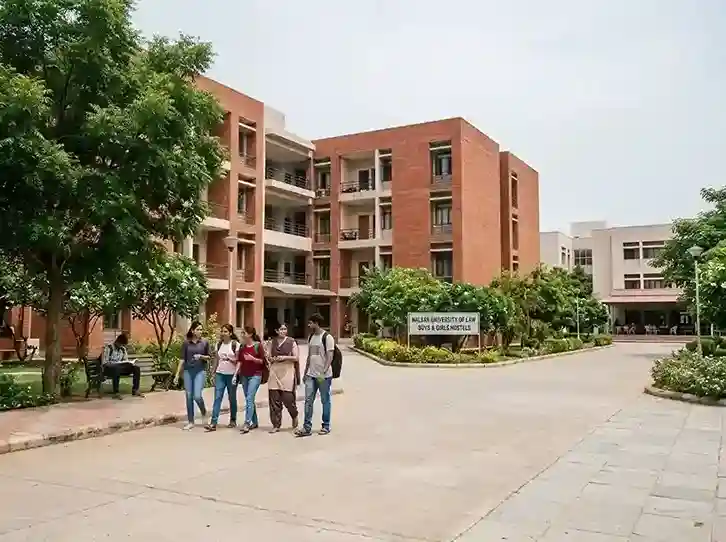
NALSAR Hyderabad Hostel 2026–27 | Complete Guide to Rooms, Fees, Facilities, Mess, Rules & Campus Life
📅 Updated: May 29, 2026
✍️ By Meera Patel | Law College Life Editor, LawGuru India
⏱ 13 min read
NALSAR University of Law, Hyderabad is one of India's only fully residential National Law Universities | every student, from the first-year BA LLB aspirant to the doctoral scholar, lives on campus. The hostel is not an add-on; it is the core of the NALSAR experience. This comprehensive guide covers everything incoming students and their families need to know: hostel structure and room types, year-wise room allocation, complete fee breakdown, mess and food quality, all campus amenities, hostel rules and regulations, safety systems, campus life activities, what to pack, and how NALSAR's hostel experience compares with other top NLUs | so you can make a fully informed decision about life at NALSAR.
NALSAR Hyderabad Hostel 2026–27 | Fully Residential Campus | Rooms, Fees & Campus Life | LawGuru India
537
Total hostel beds (286 boys + 251 girls)
₹24K
Annual hostel (room) fee per student
₹40K
Annual mess fee (all meals included)
55 acres
Fully residential campus in Shameerpet, Hyderabad
NALSAR Hostel 2026–27 | Key Facts at a Glance
Residential Status: FULLY residential | hostel mandatory for ALL students; no off-campus living permitted
Boys Hostel: 286 beds | Girls Hostel: 251 beds | Total: ~537 beds (expanded with new buildings)
Room Allocation: Double occupancy (Years 1–3) → Single occupancy (Years 4–5 of BA LLB)
LLM / MBA Students: Single occupancy from the start of their programme
Room Furnishings: Cot, study table, chair, wardrobe/cupboard per student; fan; no default AC
Special Rooms: Some rooms offer lake views | allocated based on availability and seniority
Annual Hostel Fee: ₹24,000 per year (room charges)
Annual Mess Fee: ₹40,000 per year (3 meals + snacks daily)
Annual Utilities: Internet ₹8,000 | Electricity ₹12,000 | Water ₹12,000 | Generator ₹5,000
Total Annual Hostel Cost: ~₹1,07,000 per year (room + mess + all utilities)
1. Why NALSAR Is Fully Residential | The Philosophy Behind It
The decision to design NALSAR University of Law as a fully residential campus was deliberate and foundational | not an administrative convenience. Every NLU in India is residential by design, but NALSAR takes this commitment particularly seriously: no student is permitted to live off campus, regardless of proximity to family, personal preference, or any non-medical reason.
The rationale is well-established in legal education philosophy. The residential model does three things that a day-school model cannot: it creates an intense, immersive intellectual community where learning extends far beyond classroom hours; it forces students from radically different states, languages, and backgrounds to share daily life; and it builds the resilience, peer learning, and collaborative problem-solving that are central to the culture of top law schools worldwide.
At NALSAR, the hostel is not where you sleep after class | it is where much of the real education happens. Late-night discussions about a Supreme Court judgement in the common room, moot court practice sessions in the corridor at midnight, spontaneous debates over mess food, study groups that form organically during examination week | none of this is possible without a residential community. NALSAR's alumni consistently cite the residential experience as one of the most formative aspects of their five years at the university.
The 55-acre NALSAR campus in Shameerpet | approximately 35 kilometres from Hyderabad city centre | is self-contained precisely because of this philosophy. The relatively remote location, which some prospective students see as a disadvantage, is in fact the architect of the community that makes NALSAR what it is. When you are not easily able to leave campus on a weekday evening, you invest in the people and the learning environment around you.
🏡 "A Wildlife Resort" | First Impressions of the NALSAR Campus
First-time visitors to the NALSAR campus | particularly parents dropping off students for the first year | frequently describe it as more resembling a resort or retreat than a university campus. The 55-acre property features a variety of trees, manicured lawns, a small pond, bold architecture, and tasteful landscaping. The campus environment is one of the most aesthetically distinctive among India's National Law Universities. Students who found the idea of a remote campus daunting before joining typically report within the first semester that the environment is one of the things they value most about NALSAR.
2. Hostel Structure | Boys & Girls Hostels at a Glance
🏠
Boys Hostel
286+ beds
Tall multi-floor residential building | one of the most striking structures on campus
Expanded capacity with newer hostel construction | approximately 1,000 student capacity in the expanded complex
Common TV lounge and recreational room with table tennis and snooker on each floor/block
Water coolers on each floor
Washing machine access in designated common laundry areas
Solar hot water available
24×7 Wi-Fi throughout the hostel
Housekeeping and electrical/plumbing maintenance services
Security personnel stationed at hostel entry points
Warden and assistant warden responsible for administration
🏡
Girls Hostel
251 beds
Separate residential complex for women students | dedicated entry point and administration
Rooms described by residents as spacious and well-maintained
Common TV lounge, table tennis, and recreational spaces
Water coolers and washing machine access
Solar hot water system
24×7 Wi-Fi throughout
Housekeeping and maintenance services
Female warden and support staff exclusively manage the girls' hostel
Additional security measures at main entry and exit points
Same access to the central campus facilities | library, mess, sports courts, academic blocks
Both hostels share a common, air-conditioned central mess | a design choice that facilitates daily interaction between boys and girls students from the very first day of university. The shared dining space is a significant feature of NALSAR social life and is unlike many other NLUs where gender-segregated dining is the norm.
3. Room Types & Year-Wise Allocation
Room allocation at NALSAR follows a well-defined progression based on year of study. This system is both fair | everyone goes through the same stages | and motivating: students have something to look forward to as they advance through the programme.
Year / Programme
Room Type & Arrangement
Status
Year 1 | BA LLB
Double occupancy | share with one assigned roommate. Room furnished with 2 sets of furniture (cot, table, chair, cupboard).
Double / Shared
Year 2 | BA LLB
Double occupancy continues. Roommate may be re-assigned or retained based on mutual preference and warden approval.
Double / Shared
Year 3 | BA LLB
Double occupancy | final shared year for BA LLB students. By this stage most students are familiar with the campus routine and community.
Double / Shared
Year 4 | BA LLB
Single occupancy allocated. Students now have their own private room for the first time | a significant quality-of-life upgrade that most students greatly value.
Single Room ⭐
Year 5 | BA LLB
Single occupancy continues. Final year students retain their single rooms while also preparing for placements, competitive exams, and thesis/project submissions.
Single Room ⭐
LLM / MBA
Single occupancy from the start of their programme. PG students are allocated individual rooms as a standard provision, reflecting their more independent academic needs.
Single Room ✓
PhD / Doctoral
Single occupancy. PhD scholars have separate residential provisions. Deposits differ from UG students (see fee table).
Single Room
The transition from shared to single-occupancy rooms at Year 4 is one of the most anticipated events in the NALSAR residential calendar. For many students, the first three years of sharing | including the occasional friction, the late-night study sessions with a roommate, the shared experience of navigating university life together | are remembered with as much fondness as the later privacy. The double-occupancy period is not a compromise; it is a deliberate community-building mechanism that produces some of the strongest friendships of a law student's life.
4. Inside the Rooms | What Is Provided & What You Need to Bring
Each NALSAR hostel room | whether double or single | is furnished with a standard set of furniture that covers the basic necessities of study and sleep. The university provides the infrastructure; students personalise it.
Standard in-room provisions (per occupant):
One single cot (with mattress)
One study table and chair
One wardrobe / almirah / cupboard
One mirror
Ceiling fan
Electrical power points for charging devices and standard electronics
Wi-Fi connectivity (24×7 across campus; included in the internet fee)
Shared bathroom and washing facilities: Attached bathrooms are not a standard feature in most rooms | bathrooms are shared per floor or per block. Washing machines are available in designated common laundry areas. Solar hot water is available for showers and general use.
What is NOT provided and should be brought: bedsheets, pillows, blankets, towels, personal toiletries, stationery, personal study lamps, extension boards (for multi-device charging), hangers, and any personal items for room comfort.
What is NOT permitted in rooms: Air conditioners, air coolers, refrigerators, and other high-electricity-consumption appliances are generally not permitted. During hostel inspections (which students describe as thorough | more like room raids), such appliances will be flagged. Irons, blow dryers, and hot plates are in a grey zone | the university officially does not permit them, though the practical enforcement varies. The general principle is: anything that draws significant power from the grid or poses a fire hazard is prohibited.
💡 The "Library Trick" During Inspections | A Cultural Note
NALSAR room inspections are taken seriously, and the student body has developed a well-known workaround: when an inspection is imminent, students lock their rooms and head to the library, creating an unusual spike in library occupancy. This cultural detail is shared by multiple NALSAR alumni as a characteristically NALSAR moment | and reflects the broader student community's practical resourcefulness. The anecdote also suggests that the library is sufficiently comfortable and well-resourced that it serves as a natural study refuge.
The NALSAR hostel and mess cost is an integral part of the total annual programme fee. Unlike at some universities where hostel is optional, at NALSAR all students are required to pay these charges as part of their annual fee payment.
💰 Annual Recurring Hostel & Living Charges (Per Student)
Hostel / Room Accommodation Fee
₹24,000
Mess Charges (3 meals + snacks, full year)
₹40,000
Internet & Wi-Fi Charges
₹8,000
Electricity Charges
₹12,000
Water Charges
₹12,000
Generator / Diesel Charges (power backup)
₹5,000
Outsourced Services (housekeeping, maintenance)
₹3,000
Sports & Games Facilities
₹3,000
Total Annual Hostel + Living Cost
~₹1,07,000
📌 One-Time Deposits (Payable at Admission)
Hostel Deposit (refundable)
₹10,000 (₹4,000 for SC/ST)
Mess Deposit (refundable)
₹5,000
Library Deposit (refundable)
₹5,000
Total One-Time Deposits
₹20,000 (₹14,000 for SC/ST)
ℹ️ MBA Students | Slightly Different Deposit Structure
MBA students at NALSAR have a slightly different deposit structure: Library Deposit ₹10,000, Mess Deposit ₹5,000, Hostel Deposit ₹5,000. The annual fees and living costs follow the same structure as the law programmes. All fees are subject to revision by the university's Governing Body and should be verified from the official NALSAR fee notification at the time of admission. The figures above are based on the most recently published information for 2026–27.
How the total NALSAR cost stacks up: The annual hostel and living cost of approximately ₹1,07,000 combines with NALSAR's tuition fee of ₹1,46,250 per annum to give a total annual all-in cost of approximately ₹3,00,000–₹3,12,000 per year. Over five years, this works out to approximately ₹15–15.35 Lakhs total | making NALSAR one of the most affordable top-3 law schools in India, particularly given that the residential package includes all meals, Wi-Fi, utilities, and campus infrastructure access.
6. The Mess & Food | An Honest Assessment
Food is often the topic that generates the most passionate opinions among current and former NALSAR students. Here is an honest, balanced assessment based on multiple student accounts and available information.
Structure and hours: NALSAR operates a centralised, air-conditioned common mess that serves both boys and girls students together. Meals are served three times daily (breakfast, lunch, and dinner), with two snack sessions during the day. Additionally, a night canteen operates until 2 AM daily, serving tea and snacks | a feature that students who study late or socialise in the evenings particularly value.
Food variety: The mess serves both vegetarian and non-vegetarian food. Non-vegetarian options are typically available on approximately five days per week. The menu rotates and includes a range of regional Indian cuisines reflecting the diverse student body. Special menus are served during festivals, cultural events, and student celebrations | and students universally report that festival meals are a significant step up in quality from regular days.
Honest quality assessment: Most NALSAR students describe the mess food as "adequate" or "decent" rather than exceptional. The consistency of quality is the most common complaint | some meals are well-received, others are not. This is a common feature of institutional dining at scale across all NLUs, and NALSAR is neither significantly better nor significantly worse than its NLU peers in this regard. Students who feel strongly about food typically supplement with the night canteen, weekend food runs to local eateries near Shameerpet, or campus food stalls during events.
Surrounding dining options: Despite being on a relatively isolated campus, NALSAR students have access to eateries and small restaurants in the Shameerpet area near the university. These are reachable on weekends or evenings with warden permission and provide alternatives for students who want a break from mess food.
🍽️ Student Food Hacks at NALSAR
NALSAR students have developed a variety of coping strategies for mess food fatigue. The night canteen's tea and snacks are consistently popular. Food deliveries from nearby restaurants are a weekend treat. During cultural festivals like Semper Fidelis (NALSAR's annual cultural fest), the temporary food stalls on campus offer a welcome variety. The shared mess experience | and the collective commentary on the food | is also one of the bonding mechanisms that build the NALSAR community.
7. Campus Amenities & Shared Facilities
NALSAR's fully residential campus model means students have access to a range of shared facilities that go well beyond what a commuting student can access at a day school. These facilities are central to the NALSAR experience.
📚
Library & Legal Research Resources
NALSAR's library is one of its strongest assets | a well-stocked physical collection supplemented by leading digital legal databases including Manupatra, SCC Online, and international research platforms. Access is round the clock during examination periods. Students can reserve study carrels for extended sessions.
🏛
Moot Court Hall
A dedicated moot court chamber replicating a real court setting. Extensively used by student moot court teams for practice | NALSAR is one of the most decorated NLUs in national and international moot court competitions. The hall is bookable by student teams through the academic administration.
🏟️
Stadium & Sports Infrastructure
NALSAR has a stadium and dedicated sports facilities. Tennis courts (referred to as "tennis lawns" in campus descriptions) are available for student use. The campus sports culture is active | intra-university sports events and inter-NLU competitions are regular features of the academic calendar.
🌿
The Pond & Natural Landscape
A distinctive feature of the NALSAR campus is its small pond, which forms the centrepiece of the natural landscape. Some hostel rooms overlook the pond or greenery, providing "lake view" rooms that are among the most sought-after accommodations on campus. The natural environment significantly contributes to campus quality of life.
💻
Computer Labs & Wi-Fi
Dedicated computer labs for academic use, with 24×7 Wi-Fi coverage across the entire campus | hostels, academic blocks, library, and outdoor spaces. The campus internet infrastructure has been progressively upgraded to support the increased bandwidth demands of a modern student population dependent on digital research and communication.
🏋️
Recreation & Common Rooms
Each hostel block has common rooms equipped with television with cable connection, table tennis, and in some areas snooker tables. These spaces are the informal centres of hostel social life | where students relax, watch cricket matches, celebrate birthdays, and hold impromptu discussions on everything from legal theory to daily campus events.
🏥
Medical & Health Facilities
NALSAR maintains on-campus medical support for students. A sick bay or medical room with basic first-aid facilities is available. For serious medical needs, students are taken to hospitals in Hyderabad. Students with chronic medical conditions should inform the hostel administration at the time of admission for appropriate support arrangements.
🎪
Semper Fidelis & Cultural Spaces
NALSAR's annual cultural festival (Semper Fidelis) transforms the campus into a vibrant multi-day cultural event. The campus has auditorium and open-air performance spaces that host debates, music, theatre, and invited legal talks throughout the year. The cultural infrastructure is an important part of the total NALSAR living experience.
8. Safety, Security & Medical Facilities
NALSAR maintains a comprehensive security infrastructure appropriate to a residential campus housing approximately 500–600 students. The gated campus design, with controlled entry and exit points, is the primary security mechanism.
Campus gating: The NALSAR campus has a main gate with 24-hour security personnel. Entry of non-authorised visitors is controlled and logged. Parents and family members visiting students must follow the campus visitor registration process. Deliveries are managed through the gate.
Hostel access: Hostel entry is available to students 24 hours a day | there is no lock-in time within the campus. Students can move freely between the library, common rooms, mess, and outdoor spaces at any hour of the night. Leaving the campus, however, requires prior permission from the warden | a gate pass or exit form must be completed, indicating destination and expected return time.
Warden system: Each hostel has a warden (and typically assistant wardens) responsible for administration, student welfare, and rule enforcement. The wardens are academic or administrative staff members who reside on or near campus and are accessible to students. Hostel inspections are conducted periodically | these are thorough checks of room condition, adherence to appliance restrictions, and general conduct.
Medical support: Basic medical facilities are maintained on campus. The university has provisions for on-call medical support for student health needs. For emergencies, proximity to Hyderabad city (approximately 35 km) means access to major hospitals within a reasonable time. Students are advised to maintain personal health insurance and to inform the hostel warden of any pre-existing medical conditions.
9. Hostel Rules & Regulations
NALSAR's hostel regulations are designed to maintain a safe, disciplined, and productive residential environment. Key rules that every incoming student should know:
🏠
Residential Compulsion: All enrolled students must reside in the hostel. No exemptions for off-campus accommodation are granted except in cases of documented medical necessity approved by the university administration.
🚪
Campus Exit Permission: Leaving the campus requires prior gate pass/permission from the warden. Students must fill a form indicating destination and expected return. Weekend visits home are generally permitted with appropriate advance notice.
⚡
Prohibited Appliances: Air conditioners, air coolers, refrigerators, and other high-consumption electrical appliances are not permitted in rooms. Periodic room inspections enforce this. Students found with prohibited appliances may face disciplinary action.
🔇
Noise and Conduct: Reasonable noise levels must be maintained, particularly during designated quiet hours (late evening / early morning). Behaviour that disturbs other residents' study or sleep is subject to warden intervention.
📵
Visitor Policy: Non-student visitors (including family) must follow the campus visitor registration process. Access to hostel floors by non-residents is regulated.
🍱
Mess Attendance: Students are expected to use the central mess for meals as part of the mandatory hostel arrangement. The mess fee is included in the annual payment regardless of usage | there is no opt-out provision.
🧹
Room Cleanliness: Students are responsible for maintaining the cleanliness of their own rooms. Shared bathrooms and common areas are maintained by housekeeping staff, but basic personal hygiene and room tidiness are expected of each resident.
📋
Warden Authority: The hostel warden has authority over hostel administration and student conduct within the hostel premises. Students should approach the warden for any hostel-related issues, room change requests, or personal welfare matters.
10. Campus Life | What Living at NALSAR Actually Feels Like
Campus life at NALSAR is intense, intellectually stimulating, exhausting at times, and deeply formative. It is the kind of experience that is difficult to fully convey in a guide and is best understood by the testimonials of those who lived it | but we can offer a structured picture of what the daily and annual rhythms feel like.
🌅
The Academic Day | Structured but Never Dull
Classes begin in the morning and run through the afternoon. Seminars, tutorials, and faculty presentations extend into the evening. After dinner, the campus transforms into a study environment | the library fills, corridor discussions begin, moot court teams occupy the practice hall, and student journal editorial meetings go late into the night. The academic demands of a top NLU are real, and the residential model means there is no downtime commute to reset | you are in the environment all the time.
📚
The Study Culture | Peer Learning at Its Best
NALSAR's study culture is one of the most distinctive aspects of life on campus. Study groups form naturally | by subject, by friendship, by academic interest. The proximity of 500+ law students means that a question about a constitutional provision at midnight can get a knowledgeable answer from three different people in three different rooms. This peer learning density is the academic argument for the residential model, and at NALSAR it is real and palpable.
🎭
Cultural Life | Semper Fidelis and More
NALSAR's annual cultural festival, Semper Fidelis, is one of the highlights of the campus calendar. It brings together students from NLUs and universities across India, features performances, competitions, and a festive atmosphere that briefly transforms the campus into something more resembling a university fair. Beyond the annual festival, students organise regular cultural events, movie screenings, music performances, and debate competitions throughout the academic year.
⚖️
Moot Courts, Journals, and Extracurriculars
NALSAR's residential environment is the engine of its extracurricular culture. Moot court teams practice in the moot court hall for weeks before major competitions. The NALSAR Law Review editorial board works late nights on submissions. Student-run legal aid clinics organise campus visits and outreach. Debating societies meet in common rooms. All of this is possible because the participants live within five minutes of each other | a logistical luxury that day-school campuses simply cannot replicate.
🌿
The Campus Environment | Nature as a Backdrop
One of the underappreciated features of NALSAR life is the quality of the natural environment. The 55-acre campus with its varied trees, lawns, and the small pond creates a setting that is genuinely calming | important for students dealing with the cognitive and emotional demands of a demanding legal education. Late-evening walks around the campus perimeter or along the pond are a common decompression ritual. The natural environment is one of the things NALSAR students most often mention as having surprised them positively.
11. How NALSAR Hostel Compares with Other Top NLUs
University
Hostel Model & Key Feature
Annual Hostel + Mess Cost (Approx.)
NALSAR Hyderabad 🏆
Fully residential, mandatory; 55-acre campus; AC mess; lake view rooms; single from Yr 4; night canteen till 2 AM
Residential; Jodhpur campus; desert climate; hostel and mess included in annual fees
~₹75,000–₹85,000/yr
NALSAR's hostel cost is at the mid-range among top NLUs | more expensive than GNLU Gandhinagar but broadly comparable to NLSIU Bangalore and NUJS Kolkata when all utilities are included. The quality of the NALSAR residential experience | the AC mess, the natural campus, the single-room upgrade from Year 4, the night canteen | is widely regarded as one of the best among Indian NLUs. GNLU Gandhinagar is the most affordable hostel among comparable institutions, but NALSAR's campus character, culture, and 55-acre environment offer a qualitatively distinct residential experience.
12. What to Pack | NALSAR Incoming Student Checklist
Based on what the university provides and what students consistently report needing, here is a practical packing list for first-year NALSAR students:
🛏 Room Essentials
Bedsheet (single bed size) × 2
Pillow with pillowcases × 1–2
Light blanket / quilt (Hyderabad winters are mild)
Yes | NALSAR University of Law is a fully residential campus and staying in the hostel is mandatory for all enrolled students. No student is permitted to reside off campus. This applies to all programmes | BA LLB (Hons.), LLM, MBA, and PhD. The residential requirement is a non-negotiable condition of admission and is central to NALSAR's academic and community philosophy. Students with specific medical conditions requiring different accommodation arrangements should contact the university administration well before the admission process.
What is the NALSAR hostel fee for 2026–27?
+
The NALSAR annual hostel fee is approximately ₹24,000 per year for room accommodation. The annual mess charge is ₹40,000 per year. Additional annual charges include internet (₹8,000), electricity (₹12,000), water (₹12,000), generator/diesel (₹5,000), outsourced services (₹3,000), and sports and games (₹3,000). The total annual hostel and living cost is approximately ₹1,07,000 per year. One-time deposits at admission are ₹10,000 (hostel, ₹4,000 for SC/ST), ₹5,000 (mess), and ₹5,000 (library). All figures are subject to revision by the university and should be confirmed from the official NALSAR fee notification.
Do first-year students at NALSAR get single or shared rooms?
+
First-year BA LLB students at NALSAR are allotted double-occupancy rooms | they share the room with one other student. This arrangement continues for the first three years (Years 1–3). From Year 4 onwards, students receive single-occupancy rooms. LLM, MBA, and PhD students receive single rooms from the beginning of their programme. Each double-occupancy room is furnished with two sets of furniture (cot, study table, chair, and wardrobe) for each occupant.
Can NALSAR students go home on weekends?
+
Yes, NALSAR students can go home on weekends, but they must obtain permission from the warden and fill a gate pass form indicating their destination and expected return time. The campus operates a 24-hour internal access policy | students can move freely within the campus at any time | but leaving the campus requires prior warden permission. Weekend home visits are generally approved without issues for students who submit the request appropriately in advance.
What is the mess like at NALSAR? Is the food good?
+
NALSAR has a centralised, air-conditioned common mess serving both boys and girls. Three main meals (breakfast, lunch, dinner) and two snack sessions are served daily. Non-vegetarian options are available approximately five days a week. Quality is generally described by students as "adequate and nutritious" | not exceptional, but sufficient. The night canteen operates until 2 AM and serves tea and snacks. Special meals during festivals receive positive reviews. The mess charges of ₹40,000 per year work out to approximately ₹109 per day for all meals | reasonable for a central Hyderabad area campus.
Are there lake view rooms at NALSAR hostel?
+
Yes. The NALSAR campus features a small pond, and some hostel rooms overlook this water body or the surrounding greenery, giving them the informal designation of "lake view rooms." These are among the most sought-after rooms on campus. Room allocation is managed by the hostel administration | room preferences can be expressed, but allocation ultimately depends on availability and the university's discretion. Senior students (Year 4 and 5) who have earned single-occupancy status have more scope to request preferred rooms.
NALSAR requires a CLAT rank within the top 159–170 (General AI). Its ₹1.07 Lakh annual hostel cost, fully residential 55-acre campus, and NIRF #3 ranking make it one of India's best-value law school choices. Start your preparation now.